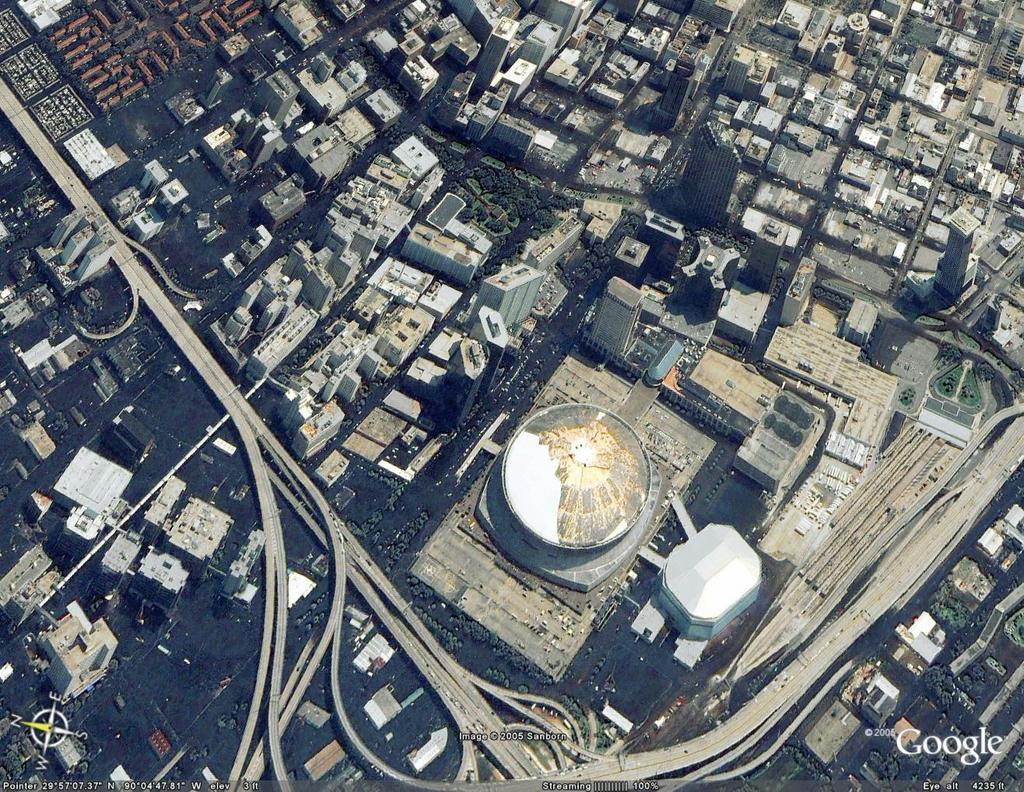
At a time when the power of information technology doubles every 12 to 15 months and extends to capture every scrap we have, digitizing biodiversity information is a final frontier for IT. It's an essential step to ensure society maintains and hopefully increases bio-literacy. Toward this end, there's Antweb. It's a project from the California Academy of Sciences that has incorporated the Google Earth interface to provide location-based access to the diversity and wonder of ants: from your backyard to the Congo Basin.
As society advances, literacy increases and bio-literacy decreases. If you're illiterate, you may view a library as thinly sliced stacks of firewood; a Google search engine is meaningless. If you are bio-illiterate, a forest is at best a green blob to be consumed. If you are bio-literate, you see the diversity of the forest and understand that each animal, each plant, tells a story and has a place.
Google has helped us achieve free and democratic access to information, but now, with Google Earth, it's taken an important step to promote bio-literacy. Together with other institutions in the Bay Area, Google is uniquely poised to take on this enormous task.
There are two ways people need to access information on biodiversity: either have a name for which they want more information, or they are at a location and want to know what they will find there. On Antweb, you can access information about ants via location – and Google Earth allows for any scale of access via location. So you can be in Santa Clara County and see what ants you are likely to find. Soon you will be able to create a field guide for ants in any location defined in Google Earth.
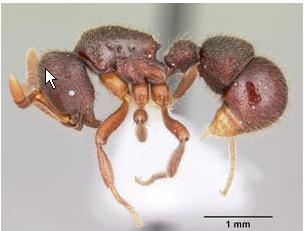
We tried to get NASA’s help to develop such a system for years with their mapping expertise and data, but Google Earth answered the call first. I am so impressed with Google that I have named an ant I recently discovered in Madagascar Proceratium google. Its bizarrely-shaped abdomen is an adaptation for hunting down obscure prey: spider eggs. Here's what it looks like.
 I hope that Google will continue applying its skills to serve biodiversity data to conservation planners and the general public. Google has given us a tool to connect the 6 billion people on earth with our remaining biodiversity. Antweb welcomes any form of collaboration to help achieve this goal – and may the ants be with you.

 Ha Ji-won born in June 28, 1979, made her television debut in 1997 on KBS TV. She won a Grand Bell award as the Best New Actress of 2000 with her debut film Truth or Dare, and a Blue Dragon award for Best Supporting Actress with her second film, the popular melodrama Ditto (2000). After achieving wider public recognition as a "horror queen" for her roles in Ahn Sung-ki's films A Nightmare and Phone, she has branched out into a variety of roles such as that of a cheerleader in Sex is Zero, which was one of most successful comedies of the year 2002 in South Korea.
  Many beautiful young actresses got their start as a 'campaign girl', or swimwear poster girl for a Japanese corporation. In the case of Matsushima, an 18-year old aspiring model, the company was Asahi Kasei - a pharmeceuticals company with no relation to swimwear whatsoever. A year later, in 1993, she got the more visible 'image girl' job with Asahi Beer. Another couple of years of slogging saw her make her TV debut in a forgettable TV drama. Her break came when she auditioned for and got the lead in the 1996 NHK morning drama series Himawari (Sunflower). Unlike the commercial TV stations, NHK has the reputation in Japan of producing 'quality' programs and successful exposure there often brings the prestige of being a 'real' actor.

 Following this slight exposure, Guerra returned to her normal life. She took a job as a loans officer, but still kept her eye out for modeling opportunities whenever they came. After browsing through an FHM magazine, a close friend suggested she send in pictures of herself. With nothing to lose, Guerra did just that.
 From 2001 to 2004, she was by far the most successful J-Pop singer in terms of sales and popularity. She has an aversion to singing in the English language (which is rare among Japanese singers), and writes her own lyrics. She is one of Japan's most prolific recording artists, having released 24 albums and 34 singles as of September 2004. Recently she started to write some of her own music with the pen name 'CREA' named after one of her beloved dogs, her single 'M' was the first time she has ever done music and lyrics altogether.
 "All of my ex-boyfriends - although of course not Paris (Latsis) - would be like: 'What's the matter with you? You're so not sexual'," she said to Vanity Fair.